We were here before the hype. We'll be here after it.
We don't go viral and we're not backed by venture capital. We're backed by years in the trenches — and that's exactly what protects you when AI can't make good on its promises.
Talk to a Human →What we do
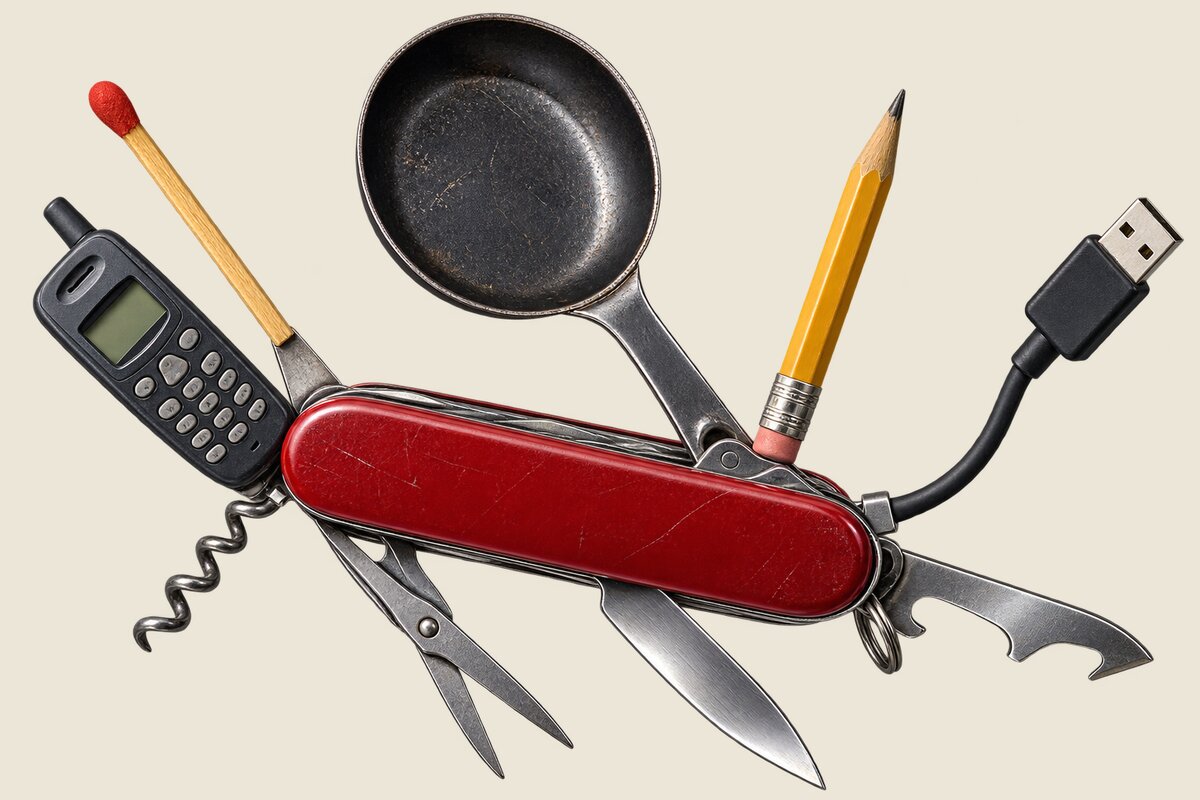
We repair. We step in. We're the human consulting you call when the machine fails you — last-mile deployment, the development work nobody finished, and spot-checking the outputs that look right until someone actually checks. Whatever's broken, a real person looks at it and gets it working.
In practice, that's front-end and back-end development, QA, UX/UI design, data management, migrations, and recruiting. Something outside that list? We'll take a look, fix it if we can, or hook you up with someone who can.
Tell us what needs fixing →Real people, real fixes

Untangled six months of unchecked AI
"My team used AI to move faster, and for a while it looked like it was working. Nobody was checking anything before it shipped, though, so every shortcut and bad call the tools made went straight to production. Six months later we had a mess so tangled it would've been faster to start over. Your Human didn't just untangle it — they showed us where the guardrails should've been all along."
Eleanor Cross — VP of Product

Rebuilt a codebase built to fail
"We shipped our first version with AI and one engineer — that was the whole pitch to investors. Every wall we hit after that, we just threw a bigger model and more tokens at it. An outside audit found the code barely held together, full of mistakes a junior engineer would've caught. Your Human rebuilt it like people who plan to maintain it."
Julian Voss — Founder & CEO

We sent a human to their office until it was fixed
"We put six figures into an AI platform that was supposed to modernize how we run dispatch. Eight months later, drivers were still calling in on the radio because it couldn't route around a closed bridge, and the vendor wouldn't get an actual person on the phone. Your Human sent someone to sit with our dispatch team for a week. That's the difference between buying software and hiring help."
Gerald Whitfield — CEO
Questions people actually ask
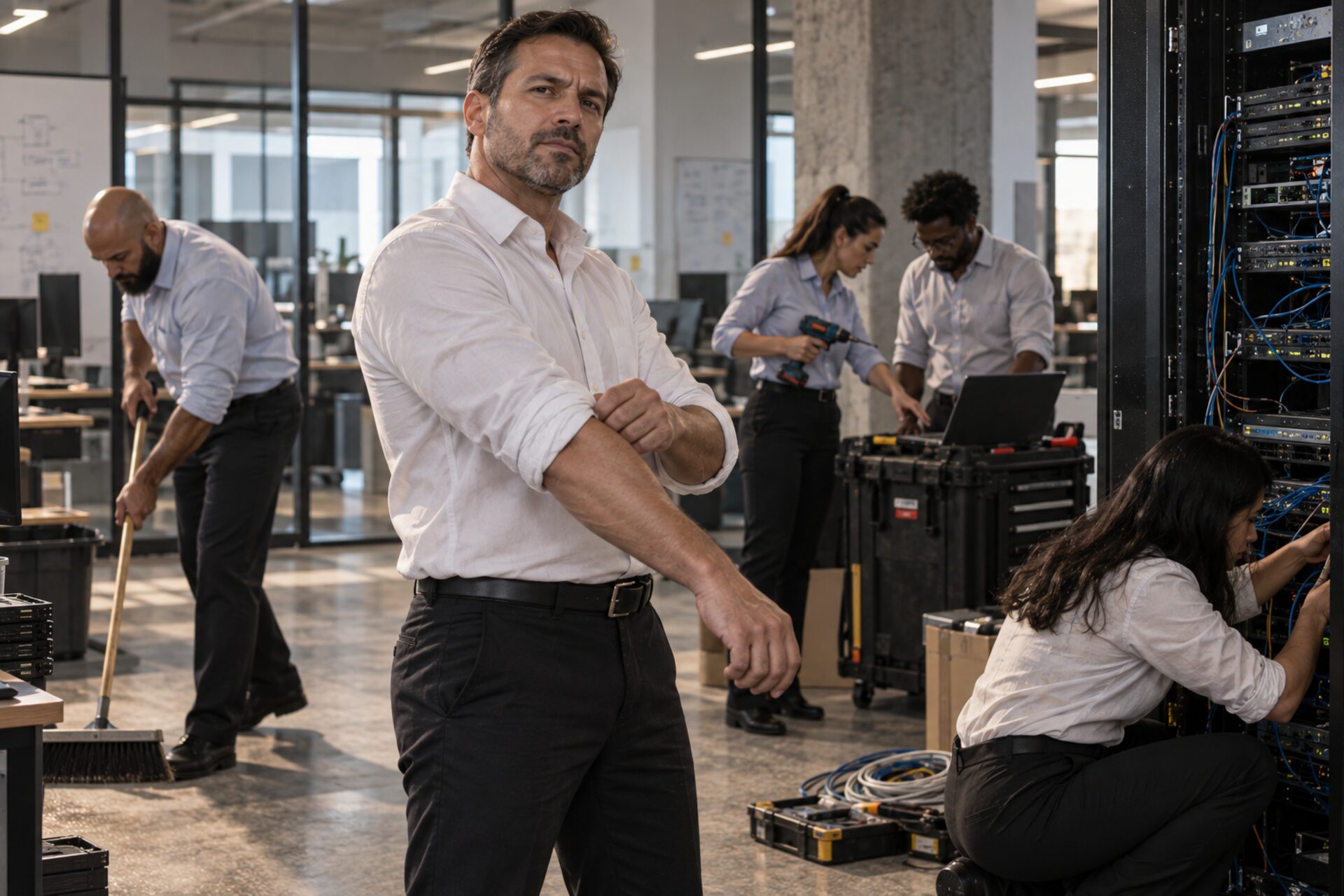
We're a team of professionals who've been around long enough to watch fads rise, promise the world, and leave a mess behind when they fall. We're the ones you call when AI hangs you out to dry. We're a team of humans who show up and get stuff done. No agents that apologize, only humans that stick around to fix it.
We do. AI is one of many tools we use, and it has its place in our process. It doesn't get to make decisions or dictate how we work — we do the thinking and make the calls ourselves, which is exactly how we stay accountable for everything we deliver. Where it earns its keep is augmenting what we can already do and taking the boring, repetitive tasks off our plate. AI is genuinely great. It's just not a silver bullet, and it's not the holy grail some people are selling it as — it's a tool, a very powerful one, only ever as good as the hand that's wielding it.
We clean up where AI fails. Most of what comes through the door is front-end and back-end development (React, TypeScript, Java, PHP, Python — that range), QA, UX/UI design, data management, migrations, and recruiting — candidate vetting specifically, since that's become its own special kind of mess lately. Something outside that list? We'll take a look, fix it if we can, or hook you up with someone who can. We know a lot of talented people — that's sort of the whole point of being human. We'd rather tell you "I don't know, but I know a guy who does" than confidently make something up while burning a million tokens. And for what it's worth, we do plenty that never makes it onto an invoice: we make a genuinely killer lentil stew, we can grill almost any animal known to man, and between us we've changed diapers, done the school run, bought the groceries, made dinner, and read the bedtime story — same day, most days.
We own it, out loud, the same day — no hedging, no "the model must have...". That's the whole point of hiring a human: someone's actually on the hook.
It depends on the size of the mess and whether you need a one-off fix or ongoing review. Tell us what happened on a call and we'll give you a straight number — no packages designed to confuse you.
Who's actually behind this

Isabel
Founder · QA & UX
Ten-plus years finding the bug nobody else could reproduce. Isabel didn't set out to work in tech — she landed in it out of pure frustration, after a plane-ticket booking fought her at every click until she'd finally had enough. Instead of just complaining about it, she went and learned QA properly, then built a career aimed squarely at the confusing, half-broken interfaces that made her want to throw her laptop across the room in the first place. She co-founded Your Human because someone has to actually click through the thing before it ships. Off the clock: her bicycle — currently training for her first race.
Biggest mess on record
She'd automated part of her QA process — a script that ran every day and reported back. The first few days it caught real issues, she validated each one, and it looked like it was doing exactly what she'd built it to do. Then it went quiet. Green report after green report, for weeks, during a slow stretch where that quiet made sense. A month in, a project manager forwarded her a bug that shouldn't have made it past a glance — the automation had silently stopped checking anything at all, and had just been reporting "all clear" out of habit. She still automates. She just doesn't trust a script that's gone quiet without asking it to prove it's still looking.

Fred
Founder · Software Engineer
Twenty-plus years writing code, and officially out of patience for two things: answering support questions an AI agent generated on a client's behalf, and untangling "vibe-coded" projects assembled by CEOs who spend a little too much time deep in the Twitter-verse and a little too little time actually shipping. Fred co-founded Your Human to put a real engineer back between the prompt and the production server. Off the clock: tennis and football.
Biggest mess on record
Every script he ran against the company's live database started the same way: he'd quietly set up an undo button first — a way to reverse everything if something went wrong, since there was no safe copy of that data to practice on. That one habit was his entire safety net, and it never failed him, until the day an AI agent wrote the script instead of him. Rushing a hotfix, he didn't check closely enough, and the agent had left that safety step out. One command later, every single record in that database had been overwritten with the exact same value. Twelve straight hours restoring it all from backup, one entry at a time, undid what one missing safeguard let happen. He still uses AI agents for plenty of things. Building the safety net around the company's real data isn't one of them anymore — that, he does himself.

Gabriel
Designer
Twenty-plus years designing, going all the way back to doodles in the margins of his high school textbooks that sent his attention wandering somewhere far more interesting than whatever was on the blackboard. That wandering turned into an actual career. Off the clock: video games, and running the table as game master for whichever role-playing campaign his group is currently deep into.
Biggest mess on record
He was building social content for a cannabis brand with no budget for a real shoot — AI-generated lifestyle images and video, edited by hand. He checked every frame for the usual tells: wrong hands, strange fingers, eyes that don't track. So locked into that check, he missed something else — one video had a toddler playing with his grandparents, and cannabis advertising anywhere near a kid is an instant violation. He sent it over confident it'd pass. The client caught the kid in five seconds. He still checks for AI tells. He also checks, now, for the things you don't need telling if you grew up human.

Brian
HR Manager
Fifteen-plus years interviewing and hiring people — long enough to watch the job get strange. These days he asks candidates to hold a hand up in front of their face on video calls, a low-tech trick for catching AI-run interview bots and real-time answer-assist tools before they get anywhere near an offer letter. Off the clock: playing percussion and getting around town on his Vespa.
Biggest mess on record
He uses AI to sort CVs — especially now that most of them are AI-written too — screening thousands of applications in the time it used to take him to get through a hundred. His tuned screener didn't just shortlist; it rejected, quietly, and it was good at that job. Too good. It kept discarding sharp candidates who didn't fit the standard shape of a resume. He only caught it while hiring for a designer role, where standing out on the page is the whole point — his agent had tagged every one of them "incomplete data" and dropped them. It still screens. It just doesn't get to reject anyone anymore — only flag what looks unusual, for him to check himself.

Ariel
Data Engineer
Twenty-five years in IT, with a résumé that tells the whole history of the industry along the way — the mainframe-to-cloud story, lived from the inside rather than read about it. Ariel's actual passion is dragging projects that have been "90% done" for months across the finish line and into production. Since AI showed up, he finally gets to do that daily: helping C-suite executives who already know exactly what data they want get it current, connected, and visualized wherever they need to see it. Off the clock: he can name a movie off a single freeze-frame, no context required.
Biggest mess on record
He got a client's pipeline into production, tested it end to end, and everyone signed off. Done. A month later, the client called — the reports looked stuck. He checked the pipeline first; it was running fine, data landing exactly where it should. The dashboard just wasn't moving. He dug into the dashboard itself and found it: the numbers had frozen on that very first test run, quietly repeating the same month ever since. The client's team fixed the bug with AI in minutes. Finding it took a human still willing to look after everything had already checked out.
We do what the tools can't
How many agents does it take to change a lightbulb? We're not going to answer that. Put a face to the task instead — work with a real person, get real results.